
The phrase “science-backed” is often offered as reassurance.
But beneath it sits an unexamined assumption:
that what you know, feel, and experience is not valid until an external authority confirms it.
When someone needs something to be “science-backed” in order to trust it, it can reflect a deeper conditioning
— a learned denial of one’s own knowing.
If you have been taught to:
distrust your feelings,
override your intuition,
suppress your desires,
then you unconsciously seek external validation and abdicate your own authority.
Science becomes a proxy for permission.
But that seeking is empty.
Because there are multiple ways of knowing — and science is only one of them.
Science is a way of knowing the material world.
It is a language designed to study what can be measured, isolated, and repeated under controlled conditions.
That is not a flaw.
But it is a limitation.
There are aspects of reality that cannot be captured through physical instruments or statistical models.
There are experiences that cannot be replicated on demand, yet are no less real for those who live them.
To be fully human — to live at full capacity — requires fluency in more than one way of knowing.
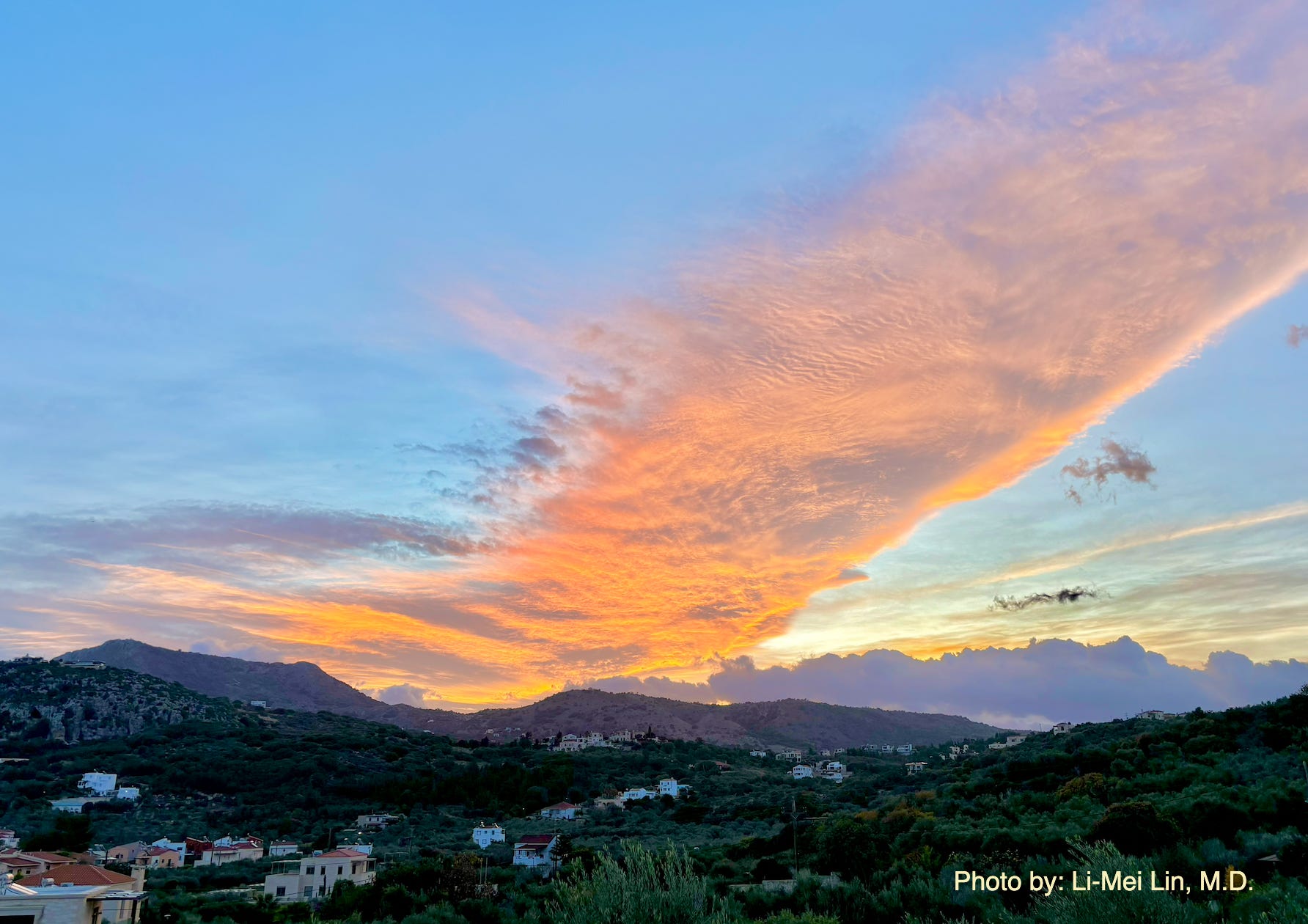
There is experiential knowing — what is learned through lived experience.
There is relational knowing — what is sensed through connection and presence.
There is subtle knowing — awareness of patterns, timing, and resonance that cannot be reduced to data points.
There is knowing of the unseen — the non-ordinary — the layers of reality that exist beyond consensus reality.
These ways of knowing are often labeled “energetic” or “spiritual,” not because they are vague, but because they operate through different instruments of perception.
As someone who knows the scientific method deeply, the phrase “science-backed” means very little to me.
Not because science lacks value — but because it is not the only language of truth.
If you wanted to understand poetry, you would not insist it be translated into calculus. If you wanted to learn a new culture, you would not demand it conform to your native grammar.
Science is one language.
Energy is another.
Spirit is another.
Each has its own syntax, discipline, and rigor.
The question is not which one is superior.
The question is whether you are willing to learn more than one.
When you restrict yourself to a single way of knowing, your capacity for life becomes constrained.
You may become
highly proficient in analysis, yet disconnected from meaning
highly informed, yet inwardly unsure
well-educated, yet unable to trust yourself.
And so you keep seeking validation from outside yourself
— studies, credentials, experts — hoping something will finally grant you certainty.
But no external authority can replace an inner capacity that has not been cultivated.
Science does not need to be rejected.
It needs to be placed in its proper context.
It is a powerful tool — not a substitute for lived truth.
And when you allow multiple ways of knowing to coexist, something shifts.
You stop outsourcing your authority.
You stop dismissing what you already sense.
You begin to trust the multidimensional intelligence of your own experience.
That is not anti-science.
It is pro-human.
And it is the difference between living with partial vision — and living with full capacity.
P.s.
High achieving deeply caring leaders have unique challenges to accessing non-scientific, intuitive, and subtle ways of knowing.
I know because I’ve navigated these unique challenges myself and now guide others in similar shoes to dissect through these blockages.
If this has sparked your interest to learn more, I invite you to explore these ways we can work together to develop these other ways of knowing for you.