
There is a phrase repeated constantly in modern culture:
“Time heals all wounds.”
As a vascular neurosurgeon, I can tell you very directly:
That is not true.
Different wounds require different levels of intervention, precision, skill, and care.
And perhaps one of the greatest misunderstandings around emotional and relational healing is the assumption that all wounds behave the same way.
They do not.
With more than 15 years operating on the brain and spine, I mastered a very important distinction between arterial bleeding and venous bleeding.
Both involve bleeding.
But they are not managed the same way.
Because pressure changes everything.
Venous bleeding is generally lower pressure.
In many cases, with enough time, pressure, packing, and stabilization, the system can often stop the bleeding on its own.
But arterial bleeding is entirely different.
Even a tiny millimeter-sized artery in the brain can become life-threatening because arterial systems carry pressure.
And when pressure is involved, simply waiting is often not enough.
In fact, waiting can be detrimental with high-pressure arterial bleeding, especially when it’s in the brain.
You must identify the precise source of the bleed.
The exact point of rupture.
And with great care, precision, and skill, stop the bleeding at its root.
This fundamental principle continues to stay with me long after surgery.
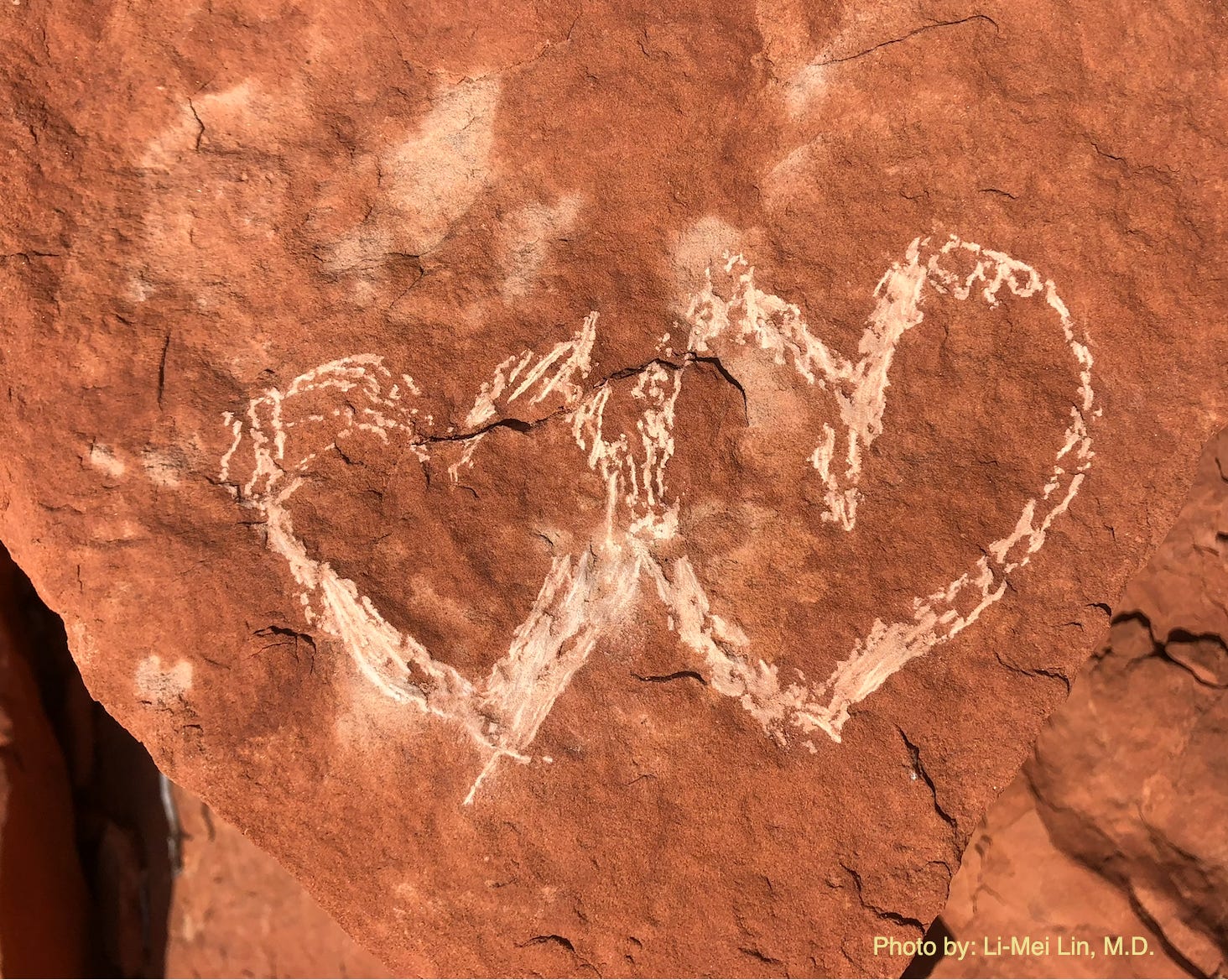
Increasingly, I began recognizing the same principle within human beings emotionally, psychologically, relationally, and spiritually.
Not all emotional wounds are equal in pressure.
Some disappointments soften with time naturally.
Some relational hurts eventually scar over and resolve.
But the deepest matters of the heart —
the most tender,
most vulnerable,
most identity-shaping wounds—
often behave much more like arterial injuries.
High-pressure wounds.
And high-pressure wounds do not stop bleeding simply because time passes.
People learn coping frameworks.
Mantras.
Insight.
Self-awareness.
Spiritual language.
Therapeutic concepts.
And yet internally, the wound continues bleeding quietly beneath the surface.
Into relationships.
Into work.
Into identity.
Into self-worth.
Into thoughts.
Into the body itself.
This is one reason many people feel frustrated after years of “healing work.”
Because they were often given generalized tools for wounds requiring extraordinary precision.
And I share this not as criticism of any modality.
But as clarification.
Permission.
Understanding.
Because certain wounds require something much more precise.
The deepest wounds of the heart require:
safety,
capacity,
discernment,
skill,
presence,
and the ability to locate the original rupture accurately.
All at once.
Not simply manage the symptoms of bleeding downstream.
And perhaps one of the most hopeful realizations I’d like to offer you is this:
If the wound has not fully healed yet, it does not necessarily mean healing is impossible.
It may simply mean the true source has not yet been precisely identified and safely tended to.
That distinction changes everything.
Not all wounds heal through time alone.
Some require extraordinary precision to finally stop the bleeding at its source.
This is how complete healing, thriving, vitality, and deep internal peace are possible.
If this essay felt clarifying, provocative, or meaningful, I’d be grateful if you shared it with someone else who may benefit from this perspective.
Because many people are trying to solve relational challenges, self-doubt, life challenges, chronic stress, chronic disease downstream—
without ever being taught to look upstream first.
I look forward to sharing deeper dives via True Whealthness®.
More Than Neurosurgeon is the space for long-form public inquiry.
True Whealthness® is where the deeper integration, practical application, and more nuanced explorations now continue.
As a subscriber here, you’ll automatically receive both.
If you’ve read this far and haven’t subscribed yet, you’re warmly invited to join below:
If you would like to opt out of True Whealthness® community emails, you may do so below:
Please note:
This essay is intended for educational, reflective, and provocative purposes only. This is NOT a substitute for individualized medical advice, diagnosis, or treatment. Reading this publication does not establish a physician-patient relationship with Li-Mei Lin, M.D. Always consult your licensed healthcare provider regarding your individual medical concerns or conditions.