
Sensitivity is not fragility.
Sensitivity is precision.
And precision is what separates excellence from harm.
In my years as an endovascular neurosurgeon, sensitivity was not optional.
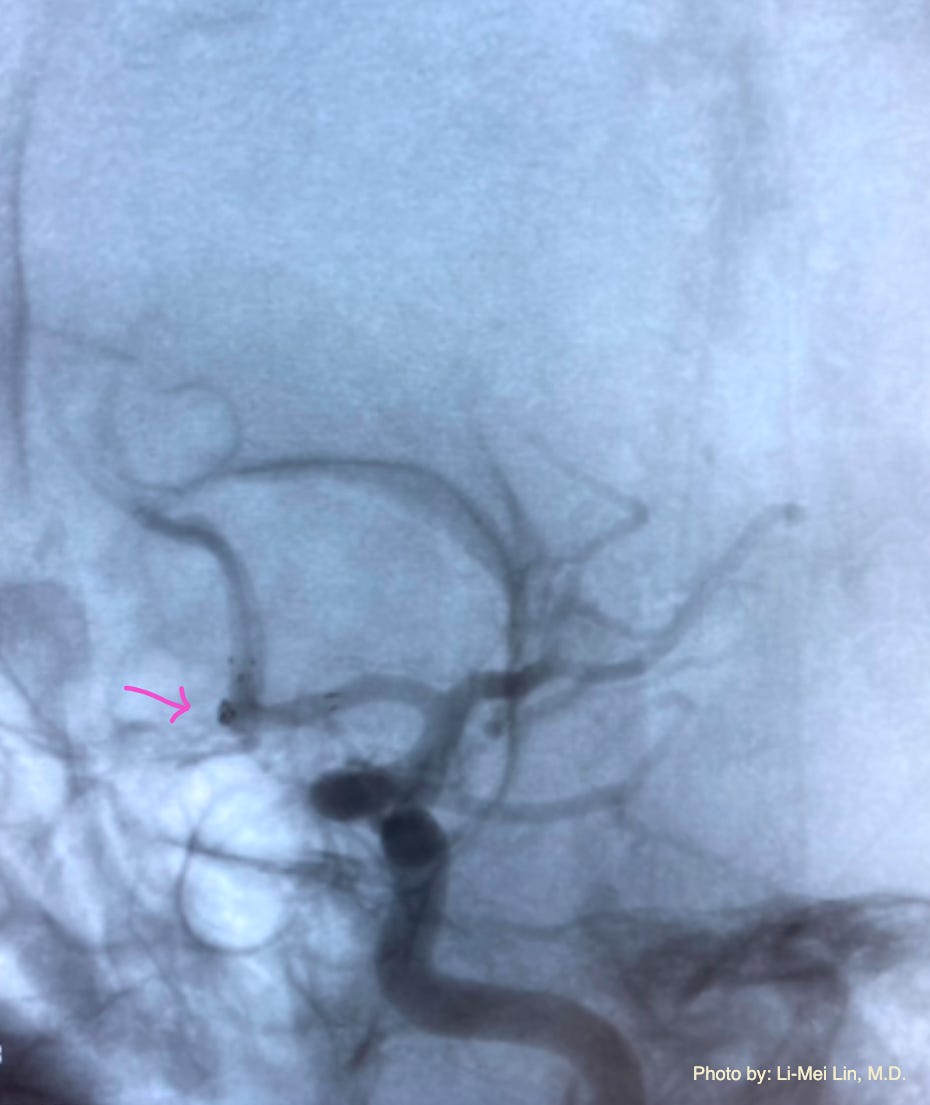
Endovascular neurosurgery means treating blood vessel problems of the brain from within the body — minimally invasively.
We would enter through the artery in the leg, travel over 100 centimeters through the vascular system, navigating upward into the arteries of the brain.
All through vessels measured in millimeters.
Using coils.
Stents.
Microcatheters.
Devices so small that a fraction of a millimeter matters.
Let me ground this in specific examples:
***The typical microwire used for majority of treatments is sized 0.014in = 0.36mm.
***The inner diameter of a delivery microcatheter for a larger sized intracranial stent is 0.027in = 0.68mm.
In this space, micro-movements are not theoretical.
A subtle shift of the wrist.
A slight loss of tactile feedback.
A moment of inattentiveness.
These can mean the difference between recovery and permanent debilitation.
Between life and death.
In that operating room, sensitivity is revered.
It is trained.
It is respected.
It is necessary.
It is celebrated.
Without sensitivity, a patient dies.
Without sensitivity, a patient may survive — but with profound disability.
There is no debate in that environment about whether sensitivity is valuable.
It is obvious.
So here is the deeper question:
Why do we prize and protect sensitivity in the brain —
but dismiss it everywhere else?
The truth is: the body is sensitive.
All of it.
Relationships are sensitive.
Organizations are sensitive.
Cultures are sensitive.
Communities are sensitive.
Human systems are as nuanced and responsive as neural tissue.
Yet outside of medicine, sensitivity is often mislabeled.
Too soft.
Too slow.
Too emotional.
Too complicated.
And so what do we do instead?
We numb.
We desensitize.
We override.
We prioritize speed.
Efficiency.
Scale.
Productivity.
Bottom lines.
We flatten nuance.
We categorize.
We label.
We generalize.
We pathologize.
And in doing so, we lower the standard.
Not all at once.
But microscopically.
Just as a micro-movement within a cerebral artery can create catastrophic consequence, small acts of desensitization accumulate.
Microaggressions compound.
Integrity erodes.
Standards slip.
Excellence becomes negotiable.
Mediocrity becomes tolerated.
Dishonesty becomes rationalized.
Relationships become transactional.
Humanity becomes robotic.
All in the name of efficiency, productivity, and quantity.
But here is what my neurosurgical training made impossible to ignore:
Sensitivity is not optional if the outcome matters.
When we ignore nuance, when we steamroll complexity, when we dismiss the micro and the nano in favor of scale and generalization, we do not become stronger.
We become crude.
And crude systems eventually collapse under the weight of what they refused to feel.
Sensitivity is not weakness.
It is intelligence operating at high resolution.
It is the capacity to perceive what is subtle before it becomes catastrophic.
It is the discipline to attend to what others dismiss as “minor.”
A return to sensitivity is not regression.
It is a return to excellence.
To hold elevated standards requires the willingness to feel the micro.
To notice small deviations before they compound.
To honor complexity rather than bulldoze it.
This applies in medicine.
In business.
In leadership.
In parenting.
In governance.
In culture.
When sensitivity is trained, integrated, and honored, outcomes improve.
When sensitivity is numbed, dismissed, or mocked, standards deteriorate.
And deterioration always begins at the smallest level.
The micron.
The nanometer.
The nuance.
The future will not be secured by more force.
It will be secured by more precision.
And precision requires sensitivity.
The same level of reverence we hold for the brain — we must extend to the body of society.
Because without it, we do not elevate.
We decay.
Most people can recognize this in systems.
Far fewer are willing to examine where it lives in themselves.
And this is where sensitivity becomes uncomfortable — because it requires honesty.
