
The question “What is the purpose of life?” — or “What is my purpose?” — is one that heart-centered, mission-driven individuals carry deeply.
It’s a question I’ve lived with myself.
As I’ve contemplated it numerous times, my perspective has continued to clarify.
I began more recently by asking a different question:
What is uniquely human?
How is being a human being different from being a tree, a cow, or any other life form?
For me, the distinction is this:
we are given the gift — and the opportunity — to create.
Not only to create offspring, but to create anything.
We can create in response to inspiration.
We can create in response to love.
We can create simply because something within us longs to be expressed.
We can also create from anger, hate, greed, destruction, and manipulation.
That capacity is not shared in the same way by other forms of life.
And yet, both modern society and many spiritual teachings quietly distort this gift.
Let’s begin with modern society.
From an early age, we are programmed
— through marketing, education, media, and social reinforcement — to believe that the purpose of life is to
make money,
acquire material success,
build a family,
and fulfill prescribed roles.
These expectations are rarely questioned. They are presented as truth.
But if this were truly the purpose of life, we would not be living in the level of chaos, dissatisfaction, and fragmentation we see today.
Something is off.
Modern society uses the human capacity to create
— but it channels that creation into institutional roles, economic productivity, and mass production.
Human beings become instruments for systems rather than stewards of their own creative intelligence.
Creation becomes obligation.
Expression becomes compliance.
Purpose becomes performance.
In this way, the human gift is not honored — it is extracted.
Now, on the other end of the spectrum, many spiritual and religious teachings veer off in a different way.
Across a range of traditions — including widely practiced religions such as Buddhism and Christianity — there is often a shared thread of rejecting form:
rejecting the body,
rejecting the material world,
rejecting desire itself.
This creates a subtle cognitive dissonance.
We are the only form of consciousness that incarnates into form with the capacity to consciously create
— and yet many spiritual and religious teachings ask you to transcend, deny, or dismiss that very gift.
When spirituality rejects form, it inadvertently rejects the essence of being human.
The body becomes something to overcome.
The world becomes something to escape.
Creation becomes suspect rather than sacred.
This, too, is a distortion.
So on one side, modern society reduces human beings to producers for systems.
On the other, spirituality sometimes asks us to abandon the very medium — form — through which consciousness experiences itself.
Both miss something essential.
Both misunderstand the gift.
What I’ve come to see is this:
We are not here simply to create for the sake of creating.
We are not here to create to fulfill societal rules, expectations, or mass production.
And we are not here to reject form in pursuit of transcendence.
We are here to evolve in how we create.
We are here to create what is uniquely yours to create — with mastery, integrity, and beauty.
You have a limited time incarnated in form
— a brief window in which consciousness experiences itself through you.
The question, then, is not What should I create? but:
What delights you enough to bring something into form?
What inspires you to create with integrity, without obligation?
What feels alive, truthful, and inherently yours?
Creation that emerges from this place does not require sacrifice.
It does not require force.
It does not require proving worth.
It arises naturally.
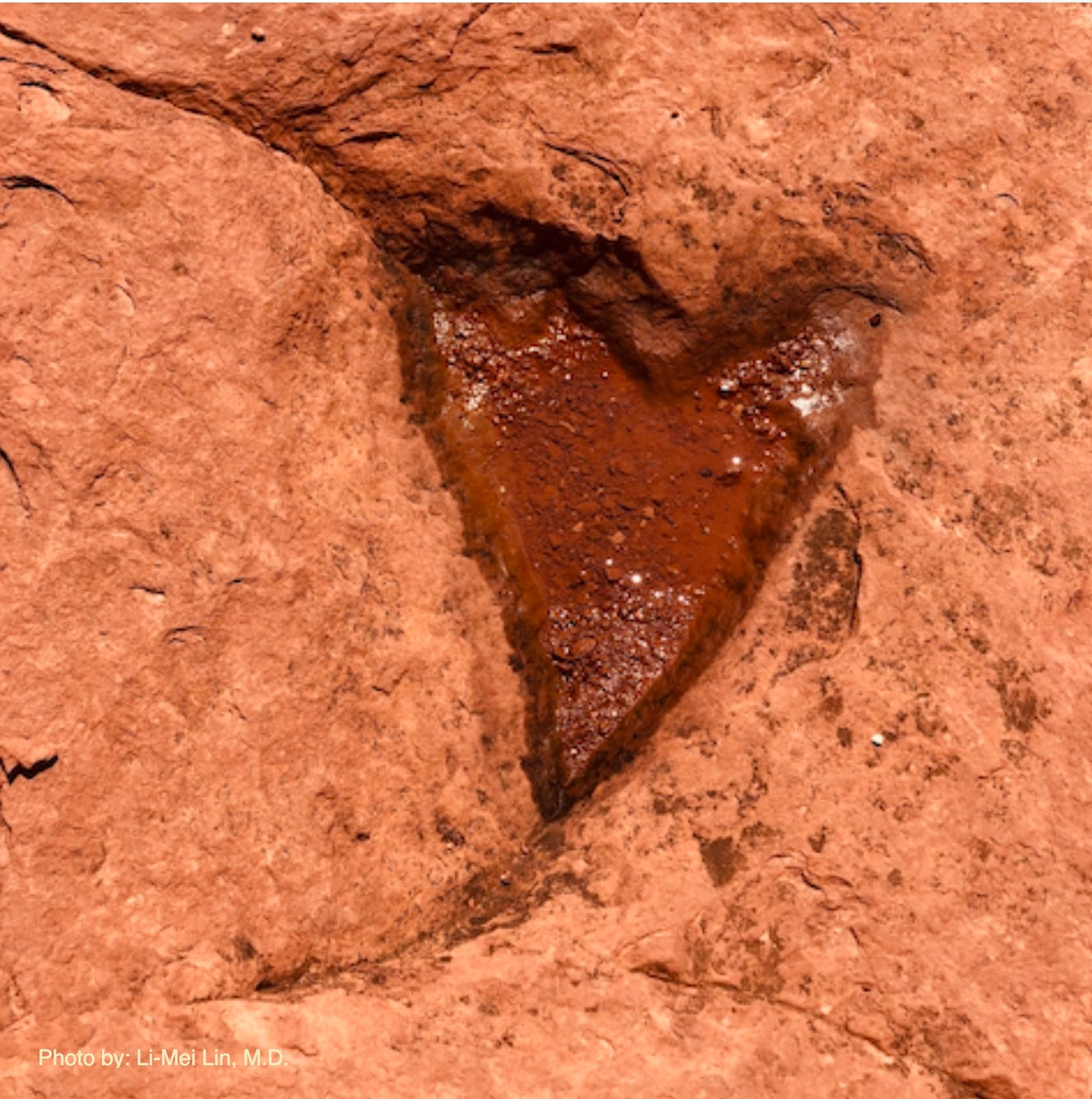
If you look at the natural world, this becomes clearer.
In nature, creation does not compete with itself.
Birth, death, and renewal exist in rhythm.
Each element has a place without requiring another to diminish.
Not all creations “make sense” by logic — and yet there is harmony.
There is flow rather than rigidity.
Relationship rather than hierarchy.
Participation rather than extraction.
Nothing in nature needs to justify its existence.
The rigidity we experience around purpose comes from conditioning — not truth.
The roles and expectations imposed by society are not organic.
They are not natural.
They are constructed.
And many spiritual/religious teachings, when examined in historical context, were shaped within societies that had already drifted from truth.
When teachings are born from distortion, subtle distortions remain embedded within them.
This does not make them wrong — but it does mean they are incomplete.
So when we return to the question “What is the purpose of life?” the answer may be simpler — and more demanding — than we expect.
To be human is to create consciously.
To create from truth rather than obligation.
To create in a way that honors form with integrity rather than exploiting or rejecting it.
Purpose is not assigned.
It emerges when you allow yourself to create what only you can —
not for mass consumption,
not for approval,
not to fulfill a role
— but because something within you knows it is time.
And when creation arises from that place, it benefits more than just you.
It benefits life itself.